Showing posts with label Diet. Show all posts

Monday, 21 April 2014

{Guest Post} Subtle ways to change your diet for your wedding- Part 2

This is part 2 of  Subtle ways to change your diet for your wedding. If you would like you to read the first part of this guest post click here. I would like to thank Kristi Charter for taking the time to write this informative guest post for my blog. 

Making the Right Choices

To ensure you stick to your healthy eating plan, you will need to change your mind frame and begin making the right choices. Saying this is one thing, but actually going through with it is another. So in order to change the way you make decisions about food you should start by focusing on the cooking methods you use. Sometimes getting results can be as simple as continuing to eat the same food but altering the way you cook it. This means less frying and more baking and grilling. When it comes to cooking your food, you should also invest in quality non-stick frying pans so that there is no need to cook with oil or butter.

Increasing your nutritional knowledge and familiarising yourself with product labels is the next step.  Products labelled as ‘low in fat’, ‘99% fat free’ or ‘light’ are not necessarily the healthiest option. In some cases if a product is lower in fat it will consequently be higher in sugars or sodium.

When reading product labels you should also be aware of the calorie trick that can often fool consumers. Most people will read the number of calories on a label and assume that’s the total number of calories for the entire packet, however it might only be a proportion of the calories in the packet. To ensure you are not fooled you will need to take note of the calories per serving and how many servings there are in the product you are about to consume.
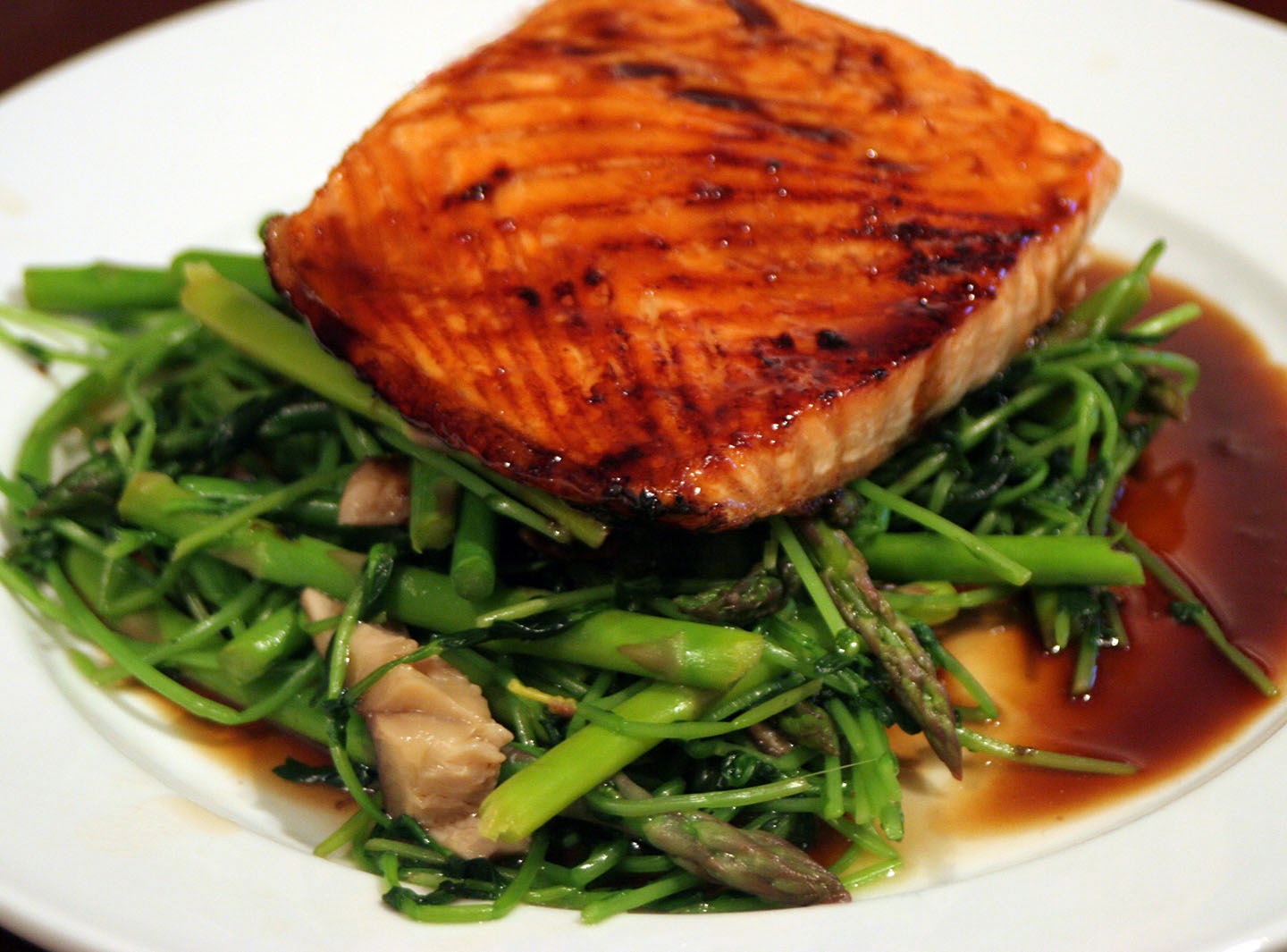
The biggest challenge you might be confronted with is what to eat when you are out to dinner. Your eating plan shouldn’t control your social life however you shouldn’t use dining out as an excuse to throw all your hard work out the window either. Simple, easy tricks you can implement when out to dinner might be asking your waiter to hold the sauce or ask for the sauce to be presented on the side in a dish rather than drizzled all over the top. This will help cut calories from your meal. Another calorie cutting trick when you do have the option is to always order a side salad or vegetables instead of fries.

Also be wary of ordering salads, while you might think it’s a great idea more often than not the dressing on your salad can be just as harmful as eating the fries.  Opting for lower calorie options or foods that pack a nutritional punch is also wise.  For example try ordering fish instead of steak. 


Monitoring Your Fluid Intake 

Three essential words to changing your diet for the better are: drink more water. It couldn’t be any simpler.  The health benefits associated with drinking more water goes without saying, however the dietary benefits may not be as obvious. Drinking a glass of water before and while you eat a meal will help prevent you from over indulging. Our thirst can also sometimes get confused with hunger, so to ensure you are not just thirsty when you find your mind wandering to what you can eat you should drink a glass of water and wait 10 minutes before you decide if you are actually hungry. Drinking plenty of water also ensures your bowels continue to function normally, something very important when watching your weight.

You should avoid soft drink as much as possible and keep in mind that juices are just as high in sugar.
If you struggle to drink water and need flavour try adding lemon or mint to your water. Alternatively you might like to try ‘diet’ or ‘sugar free’ cordials.  Aside from water you should also be adding green tea to your daily fluid intake. Green tea is packed with antioxidants and is also credited as being a ‘fat fighter’ to help aid in weight loss. 


While these are some truly helpful dietary tricks that you can easily incorporate into your eating habits, combining a healthy eating plan with regular exercise and sticking to it is the only way to truly see results and have you glowing on your special day.  

Author Bio:
Kristi Charter is an experienced freelance writer with a breadth of knowledge across an array of subjects. Captivated by the wedding industry, Kristi regularly blogs for Wedding Invitations Perth.’ 

Tuesday, 24 May 2011

Part 2: Many think starving is an express way of losing weight

Please note that the information in this blog are from reading numerous fitness magazines and other fitness sources and taught by fitness instructors. The diet and fitness methods that I mention work really well for me. Therefore, please do not feel offended if your knowledge varies or contradict my knowledge since many nutritionist and fitness instructors give different diet advise.


When you put on weight is because you eat too much and so many think by skipping meals (starving themselves) will help and speed up the process of losing weight.
I've got a friend that used to starve himself (don't know if he still do) until it was time for his dinner, and sometimes he would skip that too! He said he lost weight very quick that way. I thought he was crazy to have done that because I could never do that as I love food too much.

Yes it does work, but it is not healthy at all! It can cause some serious damage to your health and even permanent ones! Side effects include head ache, weakness, women having irregular period, damages to your muscles in your heart area (cardiac muscles) and brain. There may be only two organs that is affected (i'm sure other organs are affected) but the brain and the heart are major parts of our body and of course without them we won't be alive. Also, we all know it could lead to anorexic if you starve yourself for too long.  

Let me explain how starving causes damage to your health.

In my previous blog, I mentioned that skipping breakfast will affect your activity during the day. Not even that if you skip all other meals you would be even more tired because you have not absorbed any energy into your body. The body gets tired because our body have switched the metabolism down to save the remaining energy in order to survive. Due to lack of energy, our body will transform the sugar that is stored in our body into glucose to use as extra energy. Once that is used up, our body will move on to the protein in our muscles for survival (Hence, why you see those anorexics being extremely skinny and bony); using the protein to support out breathing, heart pumping and other basic activities. If our brain lacks sugar for a long period of time, it would cause permanent damages to the cerebrum- the larger and upper part of the brain. If you try to eat normal again to repair those damages to the brain, it won't help much because those damages are PERMANENT. So it's best NOT to starve yourself in the first place.

How can you loose weight without skipping meals?

In my previous blog, I said that it's not good to have a massive meal after starving yourself. In general you should eat until you're content NOT until you're full. Also, don't wait till your hungry to eat, you should try to have a set time for each meal.

So if you're on a diet, still have breakfast, lunch and dinner. But reduce the size of the meals. Also, split 3 meals into 5-6 SMALL meals a day, I know it doesn't sound like a diet plan sounds more like the opposite. But I did say SMALL meals. If you eat more often, your body won't feel hungry and so you won't have the urge to have a massive meal. See the example below:

9am Breakfast: Porridge* with a banana./ weetabix with tbs of honey (they really fill you up and are high in fibre)
11am Snack**: apple, banana, glass of water- the water will fill you up. ( a tip from my boyfriend)
12pm Lunch: Nando's (1/4 chicken with salad)
2-3pm Snack: a sandwich (wholemeal bread)
6pm Dinner: Something high in protein and fibre e.g. fish, vegetables.
8pm Snack: If you do get hungry have fruits and water.

The food are just suggestions but your meal schedule should be similar to that. Eat every 3 hours to stop yourself from being hungry.
Some nutritionist say that you shouldn't in between your 3 meals because you should give your body time to digest the food, burn the fat etc. To be honest, both method works but if you're the kind of person that gets hungry quick then its best to do the one I mentioned. I get hungry very often so I got to eat all the time lol!

* Recently, I've been making my own smoothie/cold porridge. I blend some oat (about half a cup), a banana, 5 strawberries, a little bit of milk (about half a glass), 3-4 tbs of natural yoghurt and 1 tbs of honey together. All that makes 2.5 cups of smoothie. I have all of it as breakfast and it really fills me up. If you want to do this, at first you would get hungry like in 30 mins but just ignore it because your body is probably used to taking solid food rather than liquid food. If you heat the mixture may last you longer because the mixture is thicker. I'm used to it now and it lasts me a good while unless I go gym.

** I love snacking on nuts sometimes. Almond, peanut, pistachio (they also contain healthy fat that you need for your body)

That's it for now, I've spoken about the schedule of your meals. So in my next blog I will talk about what you should eat and what you should avoid eating when you're on a diet.

Saturday, 21 May 2011

Part 1: If you want to diet then EAT YOUR BREAKFAST!

This blog and next few blogs will be about dieting/fitness; which is something everyone is doing now for the summer.

Many people think by loosing weight you have to skip meal and many choose to skip breakfast. That is a no no no no! It really annoys me when someone skips breakfast or any meal especially when they say they are on a diet (for those who know me may say 'not everyone loves or think about food like you do' lol) Many don't know the importance of breakfast whether you're dieting or not.

Let's just talk about in general of not having breakfast.

Nutritionist say that our concentration and energy for the day all depends on the BREAKFAST! A third of the energy is produced from the BREAKFAST. For those who don't usually eat breakfast their sugar level will be low and therefore their performance at work and awareness/concentration during the day is not very good. A good balance of sugar level will make you feel charged up.

Also think about that you've been sleeping a whole night and so all those hours you basically starved yourself. This means your metabolism has slowed down and so if you don't eat the next morning to charge your metabolism back to full it will of course stay functioning slow.And so when it comes to lunch, your metabolism cannot catch up with the food your consuming (in other words not being able to burn the food quick enough), it will allow the fat to be formed in your body.

Moving on to how you will gain weight if you skip breakfast. When you don't eat in the morning you would become really hungry later on in the day, right? And so you will want to have BIG meal to feel satisfied. If you're at work, before going on lunch break you will probably be snacking on biscuits, chocolates, etc. All those are high in calories, therefore your weight will increase.

Back to the big meal. Since you starved yourself since breakfast (actually since the last meal you had before going bed), your body will absorb as much as it can from the food because it doesn't know when it will be starve again. Its like your body is making sure it has enough stock for later on when your hungry because you may not eat. It sounds like its a good thing that the body is doing that but read on.

All those sugar your body has consumed from that massive meal will stay in your blood. Your body needs a certain amount of sugar but when it stays in your blood it is treated as excess and so your body will transform it into fat. Gradually, you will gain weight and become fat!

Ok, some of you may know some people who don't eat breakfast but are still skinny. I know people who are like that too, I guess they are just naturally skinny lol. But just know its not good for the health anyway, like I said earlier the concentration and energy level are not as good compared to someone who does have breakfast.

So, if you want to go on a diet. Make sure if you have a good break fast! Its ok to have a big breakfast but not too much calories. Also when I say have breakfast, its not just having a toast but more than that. An ideal diet breakfast would be a meal high in fibre. Porridge and weetabix are my favourite! And add a fruit with your breakfast.

That's it for now, my next blog will be about your eating patterns!